
5 Skills I've Learned from Model UN
- Claire Farrell
- Nov 13, 2018
- 4 min read
Updated: Nov 14, 2018
I have learned many many things from my six years of participating in model UN conferences. Of course I have learned things about countries I have represented over the past years and diplomacy in general, but I have since picked up a variety of skills that can easily translate into my future career. Here are the top five most transferable skills model UN has taught me.
1. Managing Crises

While some committees I have participated in the past have been pretty diplomatic and straight forward, most model UN sessions tend to go off the rails. You can be sitting in a committee discussing international security at one moment and then in the next one of the representatives from DPRK (North Korea) announce their plan to bomb the United States and everything you have prepared for is pushed to the side.
Looking past model UN, knowing how to handle crises with eloquence and grace is crucial to the realm of public relations. Remaining calm and knowing the correct way to address the public is a major part of PR. The way one handles a crisis can either make or break a company's reputation.
2. Public Speaking
I am constantly shocked at the amount of PR major classmates I have that are deeply afraid of public speaking and cannot give a good speech to save their lives! Being in communications and PR it is vital that we are able to easily give a speech or presentation either in a business meeting setting, on the news, press conferences, or in a million other PR related settings.
I was always a shy kid in middle school and high school and hated giving speeches, but like anything else, practice is key. As a model UN representative you must be able to address committee rooms of up to 200 people with your countries positions as well as go up to the microphone any time you need to speak really. At my first conference, the microphone was the bane of my existence, but after that first committee session I was waltzing up to that mic like it was nobody's business.
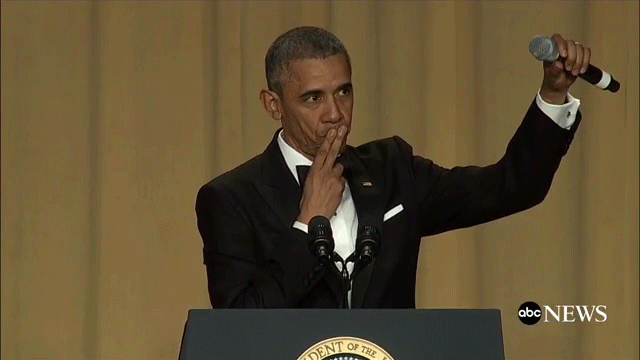
Now that I am one of the dais members, I am expected to give long speeches to the representatives semi- frequently throughout the conference. No big deal... I've done this a million times!
3. Professionalism (at a young age)
I really do believe that when you are dressed well, you are more likely to act professionally. The dress code for every model UN conference I have attended has been western business attire, so my impressive collection of blazers and nylons began when I was only 16. Dressing to impress does not intimidate or make me uncomfortable like it does to many young people, if anything it makes me act as professional as I look.
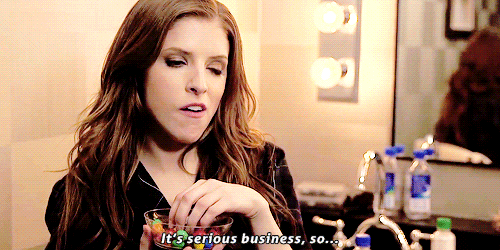
Besides having a sense of professionalism in attire, it is important to act professional in general in both business and model UN settings. Many representatives do not take committee sessions seriously and do not attempt to follow parliamentary procedure, but maintaining professional manners during committee is what keeps the simulation of the United Nations a more accurate and learning experience for everyone.
4. Cooperation
For those of you reading this who are not all to familiar with model UN (or I suppose the concept of the United Nations in general) working as an entire committee to agree upon resolutions is critical. The basis of the UN is for all countries to come together and solve the world's problem with the main goal being total world peace. Of course when you gather people from every nation there are bound to be conflicts, but in a model UN simulation you must cooperate with one another to form resolutions and get them passed by the entire body. Creating resolutions involves getting other nations to become signatories and sponsors for the resolutions to be moved to the floor and voted on. With that being said, cooperation is crucial!
Although everyone groans when they hear group work, it is undoubtedly common in the work world. As a professional it is important to let some of your guard down and focus to work with others to get your work done!

5. Networking
Connections are everything in the professional world. The job opportunities nowadays have so much to do with who you know, so it is important to get ahead on making those connections and knowing how to network with the right people.
This skill learned by model UN is less so to do with participating in conferences themselves and more to do with the AMUN conference I am on staff for now. AMUN is made up of a very diverse staff of intellectuals in basically every sector of the work force. Lawyers, managers, government employees, peace corps alumni, professors and so many more different individuals also volunteer at AMUN. Having the opportunity to work with so many well connected individuals has exposed me to new experiences and opportunities around the world.

One major example of how my AMUN connections have already helped me in life happened while I was traveling in Paris. While I was studying abroad this past spring I took a weekend trip to Paris. I was planning on meeting a friend there, but her flight was canceled and so it ended up becoming a solo trip. Via Facebook, I noticed that one of my fellow AMUN staffers was in Paris on an extended business trip. I reached out to her and we were able to connect for dinner. I did not know her too well before that evening, but we knew each other a bit through AMUN and we had a great night. Having connections everywhere just makes the world feel more manageable.

Comments